This day I will marry my friend, the one I laugh with, live for, dream with, love
Don't walk in front of me, I may not follow; Don't walk behind me, I may not lead; Walk beside me, and just be my friend. Albert Camus
Two lives, two hearts joined together in friendship united forever in love.
A mere friend will agree with you, but a real friend will argue. Russian Proverb
Life without a friend is death without a witness. Eugene Benge
Your worst enemy could be your best friend, and your best friend your worst enemy. Bob Marley
A friend is someone, who upon seeing another friend in immense pain, would rather be the one experiencing the pain than to have to watch their friend suffer. Amanda Grier
You May Be One Person To The World But You May Be The World To One Person. Anonymous .
Do not use a hatchet to remove a fly from your friend's forehead. Chinese Proverb
With true friends...even water drunk together is sweet enough. Chinese Proverb
love America because America trusts me. When I go into a shop to buy a pair of shoes I am not asked to produce my Identity Card. I love it because my mail is not censored. My phone is not tapped. My conversation with friends is not reported to the secret police. Janina Atkins
Without friends no one would choose to live. Aristotle
The road to a friend's house is never long Danish Proverb
To attract good fortune, spend a new coin on an old friend, share an old pleasure with a new friend, and lift up the heart of a true friend by writing his name on the wings of a dragon. Chinese Proverb
Sunday, September 27, 2009


Break Up Quotes
If you love something, let it go. If it comes back to you, its yours forever. If it dosent, then it was never meant to be.
Love is as much of an object as an obsession, everybody wants it, everybody seeks it, but few ever achieve it, those who do will cherish it, be lost in it, and among all, never... never forget it.
Don't let someone become your everything, because when they're gone you have nothing! Kenya Mitchell
Pleasure of love lasts but a moment, Pain of love lasts a lifetime. Bette Davis
Love is never wanting to lose faith, never wanting to give up, and never truly moving on. Love is knowing and praying in the deepest part of what's left of your heart that they feel the same. CourtneyJo Wright
I self destruct every relationship so that i don't get hurt... but in truth i just hurt myself worse in the long run..
They say loving you gives pains and full of sacrifices But I'll rather take pains and lots of sacrifices than not to be love by you. Aaron
Falling in love is awfully simple, but falling out of love is simply awful
What I needed most was to love and to be loved, eager to be caught. Happily I wrapped those painful bonds around me; and sure enough, I would be lashed with the red-hot pokers or jealousy, by suspicions and fear, by burst of anger and quarrels. St. Augustine
Love is as much of an object as an obsession, everybody wants it, everybody seeks it, but few ever achieve it, those who do will cherish it, be lost in it, and among all, never... never forget it.
Don't let someone become your everything, because when they're gone you have nothing! Kenya Mitchell
Pleasure of love lasts but a moment, Pain of love lasts a lifetime. Bette Davis
Love is never wanting to lose faith, never wanting to give up, and never truly moving on. Love is knowing and praying in the deepest part of what's left of your heart that they feel the same. CourtneyJo Wright
I self destruct every relationship so that i don't get hurt... but in truth i just hurt myself worse in the long run..
They say loving you gives pains and full of sacrifices But I'll rather take pains and lots of sacrifices than not to be love by you. Aaron
Falling in love is awfully simple, but falling out of love is simply awful
What I needed most was to love and to be loved, eager to be caught. Happily I wrapped those painful bonds around me; and sure enough, I would be lashed with the red-hot pokers or jealousy, by suspicions and fear, by burst of anger and quarrels. St. Augustine
Saturday, September 26, 2009
Healthy Tips
1. Move More Make it a daily challenge to find ways to move your body. Climb stairs if given a choice between that and escalators or elevators. Walk your dog; chase your kids; toss balls with friends, mow the lawn. Anything that moves your limbs is not only a fitness tool, it's a stress buster. Think 'move' in small increments of time. It doesn't have to be an hour in the gym or a 45-minute aerobic dance class or tai chi or kickboxing. But that's great when you're up to it. Meanwhile, move more. Thought for the day: Cha, Cha, Cha…. Then do it!\
2. Cut Fat Avoid the obvious such as fried foods, burgers and other fatty meats (i.e. pork, bacon, ham, salami, ribs and sausage). Dairy products such as cheese, cottage cheese, milk and cream should be eaten in low fat versions. Nuts and sandwich meats, mayonnaise, margarine, butter and sauces should be eaten in limited amounts. Most are available in lower fat versions such as substitute butter, fat free cheeses and mayonnaise. Thought for the day: Lean, mean, fat-burning machine…. Then be one!
3. Quit Smoking The jury is definitely in on this verdict. Ever since 1960 when the Surgeon General announced that smoking was harmful to your health, Americans have been reducing their use of tobacco products that kill. Just recently, we've seen a surge in smoking in adolescents and teens. Could it be the Hollywood influence? It seems the stars in every movie of late smoke cigarettes. Beware. Warn your children of the false romance or 'tough guy' stance of Hollywood smokers. Thought for the day: Give up just one cigarette…. the next one.
4. Reduce Stress Easier said than done, stress busters come in many forms. Some techniques recommended by experts are to think positive thoughts. Spend 30 minutes a day doing something you like. (i.e.,Soak in a hot tub; walk on the beach or in a park; read a good book; visit a friend; play with your dog; listen to soothing music; watch a funny movie. Get a massage, a facial or a haircut. Meditate. Count to ten before losing your temper or getting aggravated. Avoid difficult people when possible. Thought for the day: When seeing red, think pink clouds….then float on them.
5. Protect Yourself from Pollution If you can't live in a smog-free environment, at least avoid smoke-filled rooms, high traffic areas, breathing in highway fumes and exercising near busy thoroughfares. Exercise outside when the smog rating is low. Exercise indoors in air conditioning when air quality is good. Plant lots of shrubbery in your yard. It's a good pollution and dirt from the street deterrent. Thought for the day: 'Smoke gets in your eyes'…and your mouth, and your nose and your lungs as do pollutants….hum the tune daily.
6. Wear Your Seat Belt show that seat belts add to longevity and help alleviate potential injuries in car crashes. Thought for the day: Buckle down and buckle up.
7. Floss Your Teeth Recent studies make a direct connection between longevity and teeth flossing. Nobody knows exactly why. Perhaps it's because people who floss tend to be more health conscious than people who don't? Thought for the day: Floss and be your body's boss.
8. Avoid Excessive Drinking While recent studies show a glass of wine or one drink a day (two for men) can help protect against heart disease, more than that can cause other health problems such as liver and kidney disease and cancer. Thought for the day: A jug of wine should last a long time.
9. Keep a Positive Mental Outlook There's a definitive connection between living well and healthfully and having a cheerful outlook on life. Thought for the day: You can't be unhappy when you're smiling or singing.
10. Choose Your Parents Well The link between genetics and health is a powerful one. But just because one or both of your parents died young in ill health doesn't mean you cannot counteract the genetic pool handed you. Thought for the day: Follow these basic tips for healthy living and you can better control your own destiny.
What Is Baseball ?
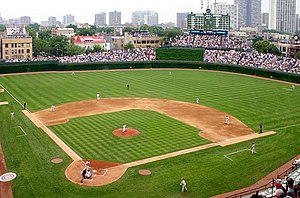
Baseball is a bat-and-ball sport played between two teams of nine players each. The goal is to score runs by hitting a thrown ball with a bat and touching a series of four bases arranged at the corners of a ninety-foot square, or diamond. Players on one team (the batting team) take turns hitting against the pitcher of the other team (the fielding team), which tries to stop them from scoring runs by getting hitters out in any of several ways. A player on the batting team can stop at any of the bases and later advance via a teammate's hit or other means. The teams switch between batting and fielding whenever the fielding team records three outs. One turn at bat for each team constitutes an inning; nine innings make up a professional game. The team with the most runs at the end of the game wins.
Evolving from older bat-and-ball games, an early form of baseball was being played in England by the mid-eighteenth century. This game and the related rounders were brought by British and Irish immigrants to North America, where the modern version of baseball developed. By the late nineteenth century, baseball was widely recognized as the national sport of the United States. Baseball on the professional, amateur, and youth levels is now popular in North America, parts of Central and South America and the Caribbean, and parts of East Asia. The game is sometimes referred to as hardball, in contrast to the derivative game of softball.
In North America, professional Major League Baseball (MLB) teams are divided into the National League (NL) and American League (AL). Each league has three divisions: East, West, and Central. Every year, the major league champion is determined by playoffs that culminate in the World Series. Four teams make the playoffs from each league: the three regular season division winners, plus one wild card team. Baseball is the leading team sport in both Japan and Cuba, and the top level of play is similarly split between two leagues: Japan's Central League and Pacific League; Cuba's West League and East League. In the National and Central leagues, the pitcher is required to bat, per the traditional rules. In the American, Pacific, and both Cuban leagues, there is a tenth player, a designated hitter, who bats for the pitcher. Each top-level team has a farm system of one or more minor league teams. These teams allow younger players to develop as they gain on-field experience against opponents with similar levels of skill.
Evolving from older bat-and-ball games, an early form of baseball was being played in England by the mid-eighteenth century. This game and the related rounders were brought by British and Irish immigrants to North America, where the modern version of baseball developed. By the late nineteenth century, baseball was widely recognized as the national sport of the United States. Baseball on the professional, amateur, and youth levels is now popular in North America, parts of Central and South America and the Caribbean, and parts of East Asia. The game is sometimes referred to as hardball, in contrast to the derivative game of softball.
In North America, professional Major League Baseball (MLB) teams are divided into the National League (NL) and American League (AL). Each league has three divisions: East, West, and Central. Every year, the major league champion is determined by playoffs that culminate in the World Series. Four teams make the playoffs from each league: the three regular season division winners, plus one wild card team. Baseball is the leading team sport in both Japan and Cuba, and the top level of play is similarly split between two leagues: Japan's Central League and Pacific League; Cuba's West League and East League. In the National and Central leagues, the pitcher is required to bat, per the traditional rules. In the American, Pacific, and both Cuban leagues, there is a tenth player, a designated hitter, who bats for the pitcher. Each top-level team has a farm system of one or more minor league teams. These teams allow younger players to develop as they gain on-field experience against opponents with similar levels of skill.
What is Basketball ?
Basketball is a team sport in which two teams of five active players each try to score points against one another by placing a ball through a 10 foot (3.048 m) high hoop (the goal) under organized rules. Basketball is one of the most popular and widely viewed sports in the world.[1]
Points are scored by throwing (shooting) the ball through the basket from above; the team with more points at the end of the game wins. The ball can be advanced on the court by bouncing it (dribbling) or passing it between teammates. Disruptive physical contact (foul) is penalized and there are restrictions on how the ball can be handled (violations).
Through time, basketball has developed to involve common techniques of shooting, passing and dribbling, as well as players' positions, and offensive and defensive structures. Typically, the tallest members of a team will play center or one of two forward positions, while shorter players or those who possess the best ball handling skills and speed, play the guard positions. While competitive basketball is carefully regulated, numerous variations of basketball have developed for casual play. In some countries, basketball is also a popular spectator sport.
While competitive basketball is primarily an indoor sport, played on a basketball court, less regulated variations played in the outdoors have become increasingly popular among both inner city and rural groups.
Points are scored by throwing (shooting) the ball through the basket from above; the team with more points at the end of the game wins. The ball can be advanced on the court by bouncing it (dribbling) or passing it between teammates. Disruptive physical contact (foul) is penalized and there are restrictions on how the ball can be handled (violations).
Through time, basketball has developed to involve common techniques of shooting, passing and dribbling, as well as players' positions, and offensive and defensive structures. Typically, the tallest members of a team will play center or one of two forward positions, while shorter players or those who possess the best ball handling skills and speed, play the guard positions. While competitive basketball is carefully regulated, numerous variations of basketball have developed for casual play. In some countries, basketball is also a popular spectator sport.
While competitive basketball is primarily an indoor sport, played on a basketball court, less regulated variations played in the outdoors have become increasingly popular among both inner city and rural groups.
What Is Football ?
Association football, more commonly known as football or soccer, is a team sport played between two teams of eleven players using a spherical ball. Association football is the most popular football variant worldwide, and is widely considered to be the most popular sport in the world.[1][2][3]
The game is played on a rectangular grass or artificial turf field, with a goal in the centre of each of the short ends. The object of the game is to score by driving the ball into the opposing goal. In general play, the goalkeepers are the only players allowed to use their hands or arms to propel the ball; the rest of the team usually use their feet to kick the ball into position, occasionally using their torso or head to intercept a ball in midair. The team that scores the most goals by the end of the match wins. If the score is tied at the end of the game, either a draw is declared or the game goes into extra time and/or a penalty shootout, depending on the format of the competition.
The modern game was codified in England following the formation of The Football Association, whose 1863 Laws of the Game created the foundations for the way the sport is played today. Football is governed internationally by the Fédération Internationale de Football Association (International Federation of Association Football), commonly known by the acronym FIFA. The most prestigious international football competition is the FIFA World Cup, held every four years. This event, the most widely viewed in the world, boasts an audience twice that of the Summer Olympic Games.[4]
The game is played on a rectangular grass or artificial turf field, with a goal in the centre of each of the short ends. The object of the game is to score by driving the ball into the opposing goal. In general play, the goalkeepers are the only players allowed to use their hands or arms to propel the ball; the rest of the team usually use their feet to kick the ball into position, occasionally using their torso or head to intercept a ball in midair. The team that scores the most goals by the end of the match wins. If the score is tied at the end of the game, either a draw is declared or the game goes into extra time and/or a penalty shootout, depending on the format of the competition.
The modern game was codified in England following the formation of The Football Association, whose 1863 Laws of the Game created the foundations for the way the sport is played today. Football is governed internationally by the Fédération Internationale de Football Association (International Federation of Association Football), commonly known by the acronym FIFA. The most prestigious international football competition is the FIFA World Cup, held every four years. This event, the most widely viewed in the world, boasts an audience twice that of the Summer Olympic Games.[4]
What Is Cricket ?
Cricket is a bat-and-ball team sport that is first documented as being played in southern England in the 16th century. By the end of the 18th century, cricket had developed to the point where it had become the national sport of England. The expansion of the British Empire led to cricket being played overseas and by the mid-19th century the first international matches were being held. Today, the game's governing body, the International Cricket Council (ICC), has 104 member countries.[1]
The rules of the game are known as the Laws of Cricket.[2] These are maintained by the ICC and the Marylebone Cricket Club (MCC), which holds the copyright. A cricket match is played on a cricket field at the centre of which is a pitch. The match is contested between two teams of eleven players each.[3] One team bats, trying to score as many runs as possible without being dismissed ("out") while the other team bowls and fields, trying to dismiss the other team’s batsmen and limit the runs being scored. When the batting team has used all its available overs or has no remaining batsmen, the roles become reversed and it is now the fielding team’s turn to bat and try to outscore the opposition.
There are several variations in the length of a game of cricket. In professional cricket this ranges from a limit of 20 overs per side (Limited Overs Cricket) to a game played over 5 days (Test cricket). Depending on the form of the match being played, there are different rules that govern how a game is won, lost, drawn or tied.
The rules of the game are known as the Laws of Cricket.[2] These are maintained by the ICC and the Marylebone Cricket Club (MCC), which holds the copyright. A cricket match is played on a cricket field at the centre of which is a pitch. The match is contested between two teams of eleven players each.[3] One team bats, trying to score as many runs as possible without being dismissed ("out") while the other team bowls and fields, trying to dismiss the other team’s batsmen and limit the runs being scored. When the batting team has used all its available overs or has no remaining batsmen, the roles become reversed and it is now the fielding team’s turn to bat and try to outscore the opposition.
There are several variations in the length of a game of cricket. In professional cricket this ranges from a limit of 20 overs per side (Limited Overs Cricket) to a game played over 5 days (Test cricket). Depending on the form of the match being played, there are different rules that govern how a game is won, lost, drawn or tied.

London 2012 - construction webcams
New Olympic Park cameras will give public front-row seatLondon 2012 has switched on six new cameras that let the public see the work taking place to deliver the Olympic Park venues and infrastructure.Each of the new ‘ParkCams’ take pictures regularly throughout the day. The latest images are updated automatically for all to see. The cameras are pointing at some of the Park’s major venues currently under construction, including the Olympic Stadium, Aquatics Centre and the Olympic Village. Other cameras point to where the new Energy Centre is being built and provide a wider view of the Park. ODA Chairman John Armitt said: ‘The Olympic Park changes every day due to the scale of regeneration taking place across the site. These new ParkCams will give the public a front row seat, making sure they don’t miss any developments as the work to build the venues and infrastructure needed for the Games and legacy accelerates.’ The cameras will show updated still images throughout the day and will be accessible via the London 2012 website - http://www.london2012.com/plans/olym...cams/index.php


Aquatic Centre This is the latest photo taken of the Aquatics Centre site, which is located in the south-east corner of the Olympic Park.
Progress on the site is well underway with construction starting in July 2008, two months ahead of schedule. During the Games the Aquatics Centre will include a 50m competition pool, a 25m competition Diving pool and a 50m warm-up pool.
Energy Centre This is the latest photo of the Energy Centre, which is located in Kings Yard on the western edge of the Olympic Park.
\

The Energy Centre will generate hot water, heating, electricity and cooling to the venues in the Park during the Games, and to the homes and buildings in the area after the Games.The existing mill building shown here will be rennovated and reused as part of the project.
Olympic Stadium This is the latest photo taken from one of two ParkCams located on the Olympic Stadium site.

Thursday, September 24, 2009
About London
London is the capital of both England and the United Kingdom. It has been a major city for two millennia, and its history goes back to its founding by the Romans, then named Londinium London's core, the ancient City of London, the 'square mile', retains its medieval boundaries. However, since at least the nineteenth century, the name "London" has also referred to the whole metropolis that has developed around it Today, the bulk of this conurbation forms the London region and the Greater London administrative area with its own elected mayor and assembly.
London is a major global cityand one of the world's largest financial centres.Central London is home to the headquarters of more than half of the UK's top 100 listed companies (the FTSE 100) and more than 100 of Europe's 500 largest. London's influence in politics, education, entertainment, media, fashion, the arts and culture in general contributes to its global position. It is a major tourist destination for both domestic and overseas visitors. London hosted the 1908 and 1948 Summer Olympics and will host the 2012 Summer Olympics.London contains four World Heritage Sites: the Tower of London; the historic settlement of Greenwich; the Royal Botanic Gardens, Kew; and the site comprising the Palace of Westminster, Westminster Abbey and St. Margaret's Church.London has a wide range of peoples, cultures, and religions, and more than 300 languages are spoken within its boundaries.In July 2007, it had an official population of 7,556,900 within the boundaries of Greater London, making it the most populous municipality in the European Union. The Greater London Urban Area (the second largest in the EU) has a population of 8,278,251.while the metropolitan area (the largest in the EU) has an estimated total population of between 12 million and 14 million. The public transport network, administered by Transport for London, is the most extensive in the world, London Heathrow Airport is the world's busiest airport by number of international passengersand the airspace is the busiest of any urban centre in the world.
London is a major global cityand one of the world's largest financial centres.Central London is home to the headquarters of more than half of the UK's top 100 listed companies (the FTSE 100) and more than 100 of Europe's 500 largest. London's influence in politics, education, entertainment, media, fashion, the arts and culture in general contributes to its global position. It is a major tourist destination for both domestic and overseas visitors. London hosted the 1908 and 1948 Summer Olympics and will host the 2012 Summer Olympics.London contains four World Heritage Sites: the Tower of London; the historic settlement of Greenwich; the Royal Botanic Gardens, Kew; and the site comprising the Palace of Westminster, Westminster Abbey and St. Margaret's Church.London has a wide range of peoples, cultures, and religions, and more than 300 languages are spoken within its boundaries.In July 2007, it had an official population of 7,556,900 within the boundaries of Greater London, making it the most populous municipality in the European Union. The Greater London Urban Area (the second largest in the EU) has a population of 8,278,251.while the metropolitan area (the largest in the EU) has an estimated total population of between 12 million and 14 million. The public transport network, administered by Transport for London, is the most extensive in the world, London Heathrow Airport is the world's busiest airport by number of international passengersand the airspace is the busiest of any urban centre in the world.
About USA
A U.S. state is any one of 50 subnational entities of the United States of America that share sovereignty with the federal government (four states use the official title of commonwealth rather than state). Because of this shared sovereignty, an American is a citizen both of the federal entity and of his or her state of domicile.However, state citizenship is very flexible, and no government approval is required to move between states (with the exception of convicts on parole).
The United States Constitution allocates power between the two levels of government. By ratifying the Constitution, each state transferred certain, but limited, sovereign powers to the federal government. Under the Tenth Amendment, all powers not delegated to the U.S. government nor prohibited to the states are retained by the states, or the people. Historically, the tasks of public safety (in the sense of controlling crime), public education, public health, transportation, and infrastructure in general have been considered primarily state responsibilities, although all of these now have significant federal funding and regulation as well.
Over time, the Constitution has been amended, and the interpretation and application of its provisions have changed. The general tendency has been toward centralization and incorporation, with the federal government playing a much larger role than it once did. There is a continuing debate over "states' rights", which concerns the extent and nature of the states' powers and sovereignty in relation to that of the federal government and their power over individuals.
The United States Constitution allocates power between the two levels of government. By ratifying the Constitution, each state transferred certain, but limited, sovereign powers to the federal government. Under the Tenth Amendment, all powers not delegated to the U.S. government nor prohibited to the states are retained by the states, or the people. Historically, the tasks of public safety (in the sense of controlling crime), public education, public health, transportation, and infrastructure in general have been considered primarily state responsibilities, although all of these now have significant federal funding and regulation as well.
Over time, the Constitution has been amended, and the interpretation and application of its provisions have changed. The general tendency has been toward centralization and incorporation, with the federal government playing a much larger role than it once did. There is a continuing debate over "states' rights", which concerns the extent and nature of the states' powers and sovereignty in relation to that of the federal government and their power over individuals.
About India
India, officially the Republic of India (Hindi: भारत गणराज्य Bhārat Gaṇarājya; see also other Indian languages), is a country in South Asia. It is the seventh-largest country by geographical area, the second-most populous country, and the most populous democracy in the world. Bounded by the Indian Ocean on the south, the Arabian Sea on the west, and the Bay of Bengal on the east, India has a coastline of 7,517 kilometres (4,700 mi) It is bordered by Pakistan to the westPeople's Republic of China, Nepal, and Bhutan to the north; and Bangladesh and Myanmar to the east. India is in the vicinity of Sri Lanka, the Maldives, and Indonesia in the Indian Ocean.
Home to the Indus Valley Civilisation and a region of historic trade routes and vast empires, the Indian subcontinent was identified with its commercial and cultural wealth for much of its long history.Four major religions, Hinduism, Buddhism, Jainism and Sikhism originated here, while Zoroastrianism, Judaism, Christianity and Islam arrived in the first millennium CE and shaped the region's diverse culture. Gradually annexed by the British East India Company from the early eighteenth century and colonised by the United Kingdom from the mid-nineteenth century, India became an independent nation in 1947 after a struggle for independence that was marked by widespread non-violent resistance
India is a republic consisting of 28 states and seven union territories with a parliamentary system of democracy. It has the world's twelfth largest economy at market exchange rates and the fourth largest in purchasing power. Economic reforms since 1991 have transformed it into one of the fastest growing economies however, it still suffers from high levels of poverty illiteracy, disease, and malnutrition. A pluralistic, multilingual, and multiethnic society, India is also home to a diversity of wildlife in a variety of protected habitats.
Home to the Indus Valley Civilisation and a region of historic trade routes and vast empires, the Indian subcontinent was identified with its commercial and cultural wealth for much of its long history.Four major religions, Hinduism, Buddhism, Jainism and Sikhism originated here, while Zoroastrianism, Judaism, Christianity and Islam arrived in the first millennium CE and shaped the region's diverse culture. Gradually annexed by the British East India Company from the early eighteenth century and colonised by the United Kingdom from the mid-nineteenth century, India became an independent nation in 1947 after a struggle for independence that was marked by widespread non-violent resistance
India is a republic consisting of 28 states and seven union territories with a parliamentary system of democracy. It has the world's twelfth largest economy at market exchange rates and the fourth largest in purchasing power. Economic reforms since 1991 have transformed it into one of the fastest growing economies however, it still suffers from high levels of poverty illiteracy, disease, and malnutrition. A pluralistic, multilingual, and multiethnic society, India is also home to a diversity of wildlife in a variety of protected habitats.
About Pakistan
Pakistan (Urdu: پاکستان Pākistān), officially the Islamic Republic of Pakistan, is a country located in South Asia (part of the Indian Subcontinent and is at a pivotal location at the crossroads of South Asia, the Middle East, and Central Asia. It has a 1,046 kilometre (650 mile) coastline along the Arabian Sea and Gulf of Oman in the south, and is bordered by Afghanistan and Iran in the west, the Republic of India in the east and the People's Republic of China in the far northeast Tajikistan also lies very close to Pakistan but is separated by the narrow Wakhan Corridor.
The region forming modern Pakistan encompassed the ancient Indus Valley Civilisation and then, successively, recipient of ancient Vedic, Persian, Turco-Mongol, Indo-Greek and Islamic cultures. The area has witnessed invasions and/or settlement by the Aryans, Persians, Greeks, Arabs, Turks, Afghans, Mongols, Sikhs and the British In addition to the Indian independence movement (led by Mahatma Gandhi of the Indian National Congress) which demanded an independent India, the Pakistan Movement (led by Muhammad Ali Jinnah of the Muslim League) sought an independent state for the majority Muslim populations of the eastern and western regions of British India. In compulsion the British granted independence and also the creation of the Muslim majority state of Pakistan that comprised the provinces of Sindh, North-West Frontier Province, West Punjab, Balochistan and East Bengal. With the adoption of its constitution in 1956, Pakistan became an Islamic republic. In 1971, a civil war in East Pakistan resulted in the creation of Bangladesh. Pakistan's history has been characterized by periods of military rule and political instability. Pakistan is still a developing nation that faces problems of poverty and illiteracy.
Pakistan is the sixth most populous country in the world and has the second largest Muslim population in the world after Indonesia It also has the second largest Shia Muslim population in the world The country is listed among the Next Eleven economies, is a founding member of the Organisation of the Islamic Conference, South Asian Association for Regional Cooperation, G20 developing nations, Asia Cooperation Dialogue and the Economic Cooperation Organisation. It is also a member of the United Nations, Commonwealth of Nations, World Trade Organisation, Shanghai Cooperation Organisation, G33 developing countries, Group of 77 developing nations, major non-NATO ally of the United States and is a nuclear state.
The region forming modern Pakistan encompassed the ancient Indus Valley Civilisation and then, successively, recipient of ancient Vedic, Persian, Turco-Mongol, Indo-Greek and Islamic cultures. The area has witnessed invasions and/or settlement by the Aryans, Persians, Greeks, Arabs, Turks, Afghans, Mongols, Sikhs and the British In addition to the Indian independence movement (led by Mahatma Gandhi of the Indian National Congress) which demanded an independent India, the Pakistan Movement (led by Muhammad Ali Jinnah of the Muslim League) sought an independent state for the majority Muslim populations of the eastern and western regions of British India. In compulsion the British granted independence and also the creation of the Muslim majority state of Pakistan that comprised the provinces of Sindh, North-West Frontier Province, West Punjab, Balochistan and East Bengal. With the adoption of its constitution in 1956, Pakistan became an Islamic republic. In 1971, a civil war in East Pakistan resulted in the creation of Bangladesh. Pakistan's history has been characterized by periods of military rule and political instability. Pakistan is still a developing nation that faces problems of poverty and illiteracy.
Pakistan is the sixth most populous country in the world and has the second largest Muslim population in the world after Indonesia It also has the second largest Shia Muslim population in the world The country is listed among the Next Eleven economies, is a founding member of the Organisation of the Islamic Conference, South Asian Association for Regional Cooperation, G20 developing nations, Asia Cooperation Dialogue and the Economic Cooperation Organisation. It is also a member of the United Nations, Commonwealth of Nations, World Trade Organisation, Shanghai Cooperation Organisation, G33 developing countries, Group of 77 developing nations, major non-NATO ally of the United States and is a nuclear state.
About Pakistan
Pakistan (Urdu: پاکستان Pākistān), officially the Islamic Republic of Pakistan, is a country located in South Asia (part of the Indian Subcontinent and is at a pivotal location at the crossroads of South Asia, the Middle East, and Central Asia. It has a 1,046 kilometre (650 mile) coastline along the Arabian Sea and Gulf of Oman in the south, and is bordered by Afghanistan and Iran in the west, the Republic of India in the east and the People's Republic of China in the far northeast Tajikistan also lies very close to Pakistan but is separated by the narrow Wakhan Corridor.
The region forming modern Pakistan encompassed the ancient Indus Valley Civilisation and then, successively, recipient of ancient Vedic, Persian, Turco-Mongol, Indo-Greek and Islamic cultures. The area has witnessed invasions and/or settlement by the Aryans, Persians, Greeks, Arabs, Turks, Afghans, Mongols, Sikhs and the British In addition to the Indian independence movement (led by Mahatma Gandhi of the Indian National Congress) which demanded an independent India, the Pakistan Movement (led by Muhammad Ali Jinnah of the Muslim League) sought an independent state for the majority Muslim populations of the eastern and western regions of British India. In compulsion the British granted independence and also the creation of the Muslim majority state of Pakistan that comprised the provinces of Sindh, North-West Frontier Province, West Punjab, Balochistan and East Bengal. With the adoption of its constitution in 1956, Pakistan became an Islamic republic. In 1971, a civil war in East Pakistan resulted in the creation of Bangladesh. Pakistan's history has been characterized by periods of military rule and political instability. Pakistan is still a developing nation that faces problems of poverty and illiteracy.
Pakistan is the sixth most populous country in the world and has the second largest Muslim population in the world after Indonesia It also has the second largest Shia Muslim population in the world The country is listed among the Next Eleven economies, is a founding member of the Organisation of the Islamic Conference, South Asian Association for Regional Cooperation, G20 developing nations, Asia Cooperation Dialogue and the Economic Cooperation Organisation. It is also a member of the United Nations, Commonwealth of Nations, World Trade Organisation, Shanghai Cooperation Organisation, G33 developing countries, Group of 77 developing nations, major non-NATO ally of the United States and is a nuclear state.
The region forming modern Pakistan encompassed the ancient Indus Valley Civilisation and then, successively, recipient of ancient Vedic, Persian, Turco-Mongol, Indo-Greek and Islamic cultures. The area has witnessed invasions and/or settlement by the Aryans, Persians, Greeks, Arabs, Turks, Afghans, Mongols, Sikhs and the British In addition to the Indian independence movement (led by Mahatma Gandhi of the Indian National Congress) which demanded an independent India, the Pakistan Movement (led by Muhammad Ali Jinnah of the Muslim League) sought an independent state for the majority Muslim populations of the eastern and western regions of British India. In compulsion the British granted independence and also the creation of the Muslim majority state of Pakistan that comprised the provinces of Sindh, North-West Frontier Province, West Punjab, Balochistan and East Bengal. With the adoption of its constitution in 1956, Pakistan became an Islamic republic. In 1971, a civil war in East Pakistan resulted in the creation of Bangladesh. Pakistan's history has been characterized by periods of military rule and political instability. Pakistan is still a developing nation that faces problems of poverty and illiteracy.
Pakistan is the sixth most populous country in the world and has the second largest Muslim population in the world after Indonesia It also has the second largest Shia Muslim population in the world The country is listed among the Next Eleven economies, is a founding member of the Organisation of the Islamic Conference, South Asian Association for Regional Cooperation, G20 developing nations, Asia Cooperation Dialogue and the Economic Cooperation Organisation. It is also a member of the United Nations, Commonwealth of Nations, World Trade Organisation, Shanghai Cooperation Organisation, G33 developing countries, Group of 77 developing nations, major non-NATO ally of the United States and is a nuclear state.
About SriLanka
Capital Cities... Colombo
Population: 21,324,791
GDP: $91,900,000,000 (USD)
Total Area: 65,610 (sq km) 25,332 (sq mi)
Currency: Sri Lankan rupee
Population: 21,324,791
GDP: $91,900,000,000 (USD)
Total Area: 65,610 (sq km) 25,332 (sq mi)
Currency: Sri Lankan rupee
About Japan
Capital Cities... Tokyo
Population: 127,078,679
GDP: $4,350,000,000,000 (USD)
Total Area: 377,835 (sq km) 145,882 (sq mi)
Currency: yen
About China
Did You Know...... China has the world's largest nunmber of pharmacists with over 418,000. They also have the most doctors .Fashion... Chinese attire is conservative and usually simple. In the past, most wore the same style pantsuits . Socializing... Chinese are noted for good manners, hospitality, and reserve. Confucianism, the ancient philosophy.Family... Historically loyalty to the family unit has always been important to the Chinese. During the Cultural ,Sports & Recreation... Table tennis, basketball and soccer are the most popular sports in China.
World Region: Asia
China History
THE HISTORY OF CHINA, as documented in ancient writings, dates back some 3,300 years. Modern archaeological studies provide evidence of still more ancient origins in a culture that flourished between 2500 and 2000 B.C. in what is now central China and the lower Huang He (Yellow River) Valley of north China. Centuries of migration, amalgamation, and development brought about a distinctive system of writing, philosophy, art, and political organization that came to be recognizable as Chinese civilization. What makes the civilization unique in world history is its continuity through over 4,000 years to the present century.
Statistics, Graphs, Charts, & Data TablesCapital Cities... Beijing »» History of BeijingPopulation: 1,338,612,968GDP: $7,800,000,000,000 (USD)Total Area: 9,596,960 (sq km) 3,705,386 (sq mi)Currency: yuan
World Region: Asia
China History
THE HISTORY OF CHINA, as documented in ancient writings, dates back some 3,300 years. Modern archaeological studies provide evidence of still more ancient origins in a culture that flourished between 2500 and 2000 B.C. in what is now central China and the lower Huang He (Yellow River) Valley of north China. Centuries of migration, amalgamation, and development brought about a distinctive system of writing, philosophy, art, and political organization that came to be recognizable as Chinese civilization. What makes the civilization unique in world history is its continuity through over 4,000 years to the present century.
Statistics, Graphs, Charts, & Data TablesCapital Cities... Beijing »» History of BeijingPopulation: 1,338,612,968GDP: $7,800,000,000,000 (USD)Total Area: 9,596,960 (sq km) 3,705,386 (sq mi)Currency: yuan
About Russia
Russia History
RUSSIA IS THE LARGEST of the fifteen geopolitical entities that emerged in 1991 from the Soviet Union. Covering more than 17 million square kilometers in Europe and Asia, Russia succeeded the Soviet Union as the largest country in the world. As was the case in the Soviet and tsarist eras, the center of Russia's population and economic activity is the European sector, which occupies about one-quarter of the country's territory. Vast tracts of land in Asian Russia are virtually unoccupied. Although numerous Soviet programs had attempted to populate and exploit resources in Siberia and the Arctic regions of the Russian Republic.
Statistics, Graphs, Charts, & Data TablesCapital Cities... MoscowPopulation: 140,041,247GDP: $2,230,000,000,000 (USD)Total Area: 17,075,200 (sq km) 6,592,735 (sq mi)Currency: Russian ruble
RUSSIA IS THE LARGEST of the fifteen geopolitical entities that emerged in 1991 from the Soviet Union. Covering more than 17 million square kilometers in Europe and Asia, Russia succeeded the Soviet Union as the largest country in the world. As was the case in the Soviet and tsarist eras, the center of Russia's population and economic activity is the European sector, which occupies about one-quarter of the country's territory. Vast tracts of land in Asian Russia are virtually unoccupied. Although numerous Soviet programs had attempted to populate and exploit resources in Siberia and the Arctic regions of the Russian Republic.
Statistics, Graphs, Charts, & Data TablesCapital Cities... MoscowPopulation: 140,041,247GDP: $2,230,000,000,000 (USD)Total Area: 17,075,200 (sq km) 6,592,735 (sq mi)Currency: Russian ruble
Falling Out and Thinning Hair
Avoid using stiff nylon brushes, rollers, pony-tails, and other hairstyles that put great pressure on the hair.
Avoid rough scalp massages and towel dying, perming and hot blow drying (these weaken the hair shaft even more). Let hair dry as naturally as possible or if you must blow dry, use low to medium heat only. Hold the blower at least 6 inches from your scalp.
Use a de-tangle and a wide-tooth comb to untangle the hair. Minimize use of a brush on wet hair. Do not wear hats or wigs on a regular continues basis. Hats and wigs can cut off circulation and oxygen, causing possible further hair loss.
Lightly massage your scalp with the tips of your fingers, always using a circular movement for five minutes when shampooing. This is good for blood nourishment to the scalp.
After shampooing, rub a few drops of a blend of essential oils such as tea tree, jojoba oil, and rosemary into your hair and scalp and message in; do not rinse out unless your hair is oily.
Avoid rough scalp massages and towel dying, perming and hot blow drying (these weaken the hair shaft even more). Let hair dry as naturally as possible or if you must blow dry, use low to medium heat only. Hold the blower at least 6 inches from your scalp.
Use a de-tangle and a wide-tooth comb to untangle the hair. Minimize use of a brush on wet hair. Do not wear hats or wigs on a regular continues basis. Hats and wigs can cut off circulation and oxygen, causing possible further hair loss.
Lightly massage your scalp with the tips of your fingers, always using a circular movement for five minutes when shampooing. This is good for blood nourishment to the scalp.
After shampooing, rub a few drops of a blend of essential oils such as tea tree, jojoba oil, and rosemary into your hair and scalp and message in; do not rinse out unless your hair is oily.
General Hair Care Tips
Maintaining a healthy lifestyle which includes proper diet and nutrition is a major key to beautiful hair. But, unfortunately, we do not always have proper eating habits. By using hair nutrients and following some general guidelines, you can keep your hair in great condition.
Healthy Hair
Good hygiene is important for healthy hair. This includes brushing the hair properly and washing it with a mild shampoo. Good nutrition (a well - balanced diet of fresh foods and lots of water) not only helps one to have beautiful - looking hair but also improves it's texture.
Wash your hair daily or every other day. The extra circulation provided by the shampoo /message stimulates the oil glands to work more efficiently and brings natural oils into the hair. This applies to all types of hair.
Use shampoo that is pH balanced and that is designed specially for you hair type (dry, oily, etc.). Ask your hair specialist to assist you in selecting the right shampoo for your hair type. Always rinse with cool (not hot) clean water for extra shine. Allow your hair to air dry naturally whenever possible. Never brush soaking - wet hair, as the hair is quite elastic at this time and can be pulled and stretched to the breaking point. A wide - toothed comb is best for wet hair.
Give your hair a good brushing before bed. This should be done by bending forward from the waist, head down, brushing from the back to front. Brush at least fifty to one hundred strokes. This will help remove dirt, pollutants and damaging particles from the hair in addition to stimulate circulation which will increase natural oils for added sheen and oxygen to the hair and scalp.
Once a week massage jojoba oil with one to two drops of rosemary oil for dry or oily hair and tea tree for hair that show signs of dandruff into the scalp. Leave on over night, wash out the next day.
Healthy Hair
Good hygiene is important for healthy hair. This includes brushing the hair properly and washing it with a mild shampoo. Good nutrition (a well - balanced diet of fresh foods and lots of water) not only helps one to have beautiful - looking hair but also improves it's texture.
Wash your hair daily or every other day. The extra circulation provided by the shampoo /message stimulates the oil glands to work more efficiently and brings natural oils into the hair. This applies to all types of hair.
Use shampoo that is pH balanced and that is designed specially for you hair type (dry, oily, etc.). Ask your hair specialist to assist you in selecting the right shampoo for your hair type. Always rinse with cool (not hot) clean water for extra shine. Allow your hair to air dry naturally whenever possible. Never brush soaking - wet hair, as the hair is quite elastic at this time and can be pulled and stretched to the breaking point. A wide - toothed comb is best for wet hair.
Give your hair a good brushing before bed. This should be done by bending forward from the waist, head down, brushing from the back to front. Brush at least fifty to one hundred strokes. This will help remove dirt, pollutants and damaging particles from the hair in addition to stimulate circulation which will increase natural oils for added sheen and oxygen to the hair and scalp.
Once a week massage jojoba oil with one to two drops of rosemary oil for dry or oily hair and tea tree for hair that show signs of dandruff into the scalp. Leave on over night, wash out the next day.
SportsmanShip
Sportsmanship is an attitude that strives for fair play, courtesy toward teammates and opponents, ethical behaviour and integrity, and grace in losing.[5]
Sportsmanship expresses an aspiration or ethos that the activity will be enjoyed for its own sake. The well-known sentiment by sports journalist Grantland Rice, that it's “not that you won or lost but how you played the game," and the Modern Olympic creed expressed by its founder Pierre de Coubertin: "The most important thing . . . is not winning but taking part" are typical expressions of this sentiment.
But often the pressures of competition or an obsession with individual achievement—as well as the intrusion of technology—can all work against enjoyment and fair play by participants.
People responsible for leisure activities often seek recognition and respectability as sports by joining sports federations such as 5 IOC, or by forming their own regulatory body. In this way sports evolve from leisure activity to more formal sports: relatively recent newcomers are BMX cycling, snowboarding, and wrestling. Some of these activities have been popular but uncodified pursuits in various forms for different lengths of time. Indeed, the formal regulation of sport is a relatively modern and increasing development.
Sportsmanship, within any given game, is how each competitor acts before, during, and after the competition. Is that really true or winning is now everything because of the huge monetary rewards that come with being a successful athlete. Not only is it important to have good sportsmanship if one wins, but also if one loses. For example, in football it is considered sportsmanlike to kick the ball out of play to allow treatment for an injured player on the other side. Reciprocally, the other team is expected to return the ball from the throw-in.
Violence in sports involves crossing the line between fair competition and intentional aggressive violence. Athletes, coaches, fans, and parents sometimes unleash violent behaviour on people or property, in misguided shows of loyalty, dominance, anger, or celebration. Rioting or hooliganism are common and ongoing problems at national and international sporting contests, particularly football matches
Sportsmanship expresses an aspiration or ethos that the activity will be enjoyed for its own sake. The well-known sentiment by sports journalist Grantland Rice, that it's “not that you won or lost but how you played the game," and the Modern Olympic creed expressed by its founder Pierre de Coubertin: "The most important thing . . . is not winning but taking part" are typical expressions of this sentiment.
But often the pressures of competition or an obsession with individual achievement—as well as the intrusion of technology—can all work against enjoyment and fair play by participants.
People responsible for leisure activities often seek recognition and respectability as sports by joining sports federations such as 5 IOC, or by forming their own regulatory body. In this way sports evolve from leisure activity to more formal sports: relatively recent newcomers are BMX cycling, snowboarding, and wrestling. Some of these activities have been popular but uncodified pursuits in various forms for different lengths of time. Indeed, the formal regulation of sport is a relatively modern and increasing development.
Sportsmanship, within any given game, is how each competitor acts before, during, and after the competition. Is that really true or winning is now everything because of the huge monetary rewards that come with being a successful athlete. Not only is it important to have good sportsmanship if one wins, but also if one loses. For example, in football it is considered sportsmanlike to kick the ball out of play to allow treatment for an injured player on the other side. Reciprocally, the other team is expected to return the ball from the throw-in.
Violence in sports involves crossing the line between fair competition and intentional aggressive violence. Athletes, coaches, fans, and parents sometimes unleash violent behaviour on people or property, in misguided shows of loyalty, dominance, anger, or celebration. Rioting or hooliganism are common and ongoing problems at national and international sporting contests, particularly football matches
Sports (history)
Sports HistorY
There are artifacts and structures that suggest that the Chinese engaged in sporting activities as early as 4000 BC.[1] Gymnastics appears to have been a popular sport in China's ancient past. Monuments to the Pharaohs indicate that a number of sports, including swimming and fishing, were well-developed and regulated several thousands of years ago in ancient Egypt.[2] Other Egyptian sports included javelin throwing, high jump, and wrestling. Ancient Persian sports such as the traditional Iranian martial art of Zourkhaneh had a close connection to the warfare skills.[3] Among other sports that originate in Persia are polo and jousting.
A wide range of sports were already established by the time of Ancient Greece and the military culture and the development of sports in Greece influenced one another considerably. Sports became such a prominent part of their culture that the Greeks created the Olympic Games, which in ancient times were held every four years in a small village in the Peloponnesus called Olympia.[4]
Sports have been increasingly organized and regulated from the time of the Ancient Olympics up to the present century. Industrialization has brought increased leisure time to the citizens of developed and developing countries, leading to more time for citizens to attend and follow spectator sports, greater participation in athletic activities, and increased accessibility. These trends continued with the advent of mass media and global communication. Professionalism became prevalent, further adding to the increase in sport's popularity, as sports fans began following the exploits of professional athletes through radio, television, and the internet—all while enjoying the exercise and competition associated with amateur participation in sports.
In the new millennium, new sports have been going further from the physical aspect to the mental or psychological aspect of competing. Cyber sports organizations are becoming more and more popular.
Activities where the outcome is determined by judgement over execution are considered performances, or competition.
There are artifacts and structures that suggest that the Chinese engaged in sporting activities as early as 4000 BC.[1] Gymnastics appears to have been a popular sport in China's ancient past. Monuments to the Pharaohs indicate that a number of sports, including swimming and fishing, were well-developed and regulated several thousands of years ago in ancient Egypt.[2] Other Egyptian sports included javelin throwing, high jump, and wrestling. Ancient Persian sports such as the traditional Iranian martial art of Zourkhaneh had a close connection to the warfare skills.[3] Among other sports that originate in Persia are polo and jousting.
A wide range of sports were already established by the time of Ancient Greece and the military culture and the development of sports in Greece influenced one another considerably. Sports became such a prominent part of their culture that the Greeks created the Olympic Games, which in ancient times were held every four years in a small village in the Peloponnesus called Olympia.[4]
Sports have been increasingly organized and regulated from the time of the Ancient Olympics up to the present century. Industrialization has brought increased leisure time to the citizens of developed and developing countries, leading to more time for citizens to attend and follow spectator sports, greater participation in athletic activities, and increased accessibility. These trends continued with the advent of mass media and global communication. Professionalism became prevalent, further adding to the increase in sport's popularity, as sports fans began following the exploits of professional athletes through radio, television, and the internet—all while enjoying the exercise and competition associated with amateur participation in sports.
In the new millennium, new sports have been going further from the physical aspect to the mental or psychological aspect of competing. Cyber sports organizations are becoming more and more popular.
Activities where the outcome is determined by judgement over execution are considered performances, or competition.
Saturday, September 19, 2009
Most Expensive Cars In The World: Top 10 List 2009-2010
World's Most Expensive Cars
What is the most expensive car in the world? The 1931 Bugatti Royale Kellner Coupe was sold for $8,700,000 in 1987. However, that car and many alike will not be included in this list because it is not available on the market today. It is hard to imagine someone would actually spend 8 million dollars on a car instead of using it for something more productive. However, if you have the money and the opportunity, you will definitely spend a small fraction of it to place a few of these supercars in your garage. Here is the 10 most expensive production cars on the market.


 5. Pagani Zonda C12 F $667,321. Produced by a small independent company in Italy, the Pagani Zonda C12 F is the 5th fastest car in the world. It promises to delivery a top speed of 215 mph+ and it can reach 0-60 in 3.5 seconds.


7. Saleen S7 Twin Turbo $555,000. The first true American production certified supercar, this cowboy is also rank 3rd for the fastest car in the world. It has a top speed of 248 mph+ and it can reach 0-60 in 3.2 seconds. If you are a true American patriot, you can be proud to show off this car.

8. Koenigsegg CCX $545,568. Swedish made, the Koenigsegg is fighting hard to become the fastest car in the world. Currently, it is the 4th fastest car in the world with a top speed of 245 mph+, the car manufacture Koenigsegg is not giving up and will continue to try and produce the fastest car. Good luck with that!

9. Mercedes Benz SLR McLaren Roadster $495,000. A GT supercar, the SLR McLaren is the fastest automatic transmission car in the world with a top speed of 206 mph+ and reaching 60 mph in 3.8 seconds. It is a luxurious convertible with a really powerful engine, which results in outstanding performances and style.

What is the most expensive car in the world? The 1931 Bugatti Royale Kellner Coupe was sold for $8,700,000 in 1987. However, that car and many alike will not be included in this list because it is not available on the market today. It is hard to imagine someone would actually spend 8 million dollars on a car instead of using it for something more productive. However, if you have the money and the opportunity, you will definitely spend a small fraction of it to place a few of these supercars in your garage. Here is the 10 most expensive production cars on the market.
1. Bugatti Veyron $1,700,000. This is by far the most expensive street legal car available on the market today. It is the fastest accelerating car reaching 0-60 in 2.6 seconds. It claims to be the fastest car with a top speed of 253 mph+. However, the title for the fastest car goes to the SSC Ultimate Aero which exceed 253 mph pushing this car to 2nd place for the fastest car.

2. Lamborghini Reventon $1,600,000. The most powerful and the most expensive Lamborghini ever built is the second on the list. It takes 3.3 seconds to reach 60 mph and it has a top speed of 211 mph. Its rarity (limited to 20) and slick design are the reasons why it is so expensive and costly to own.
2. Lamborghini Reventon $1,600,000. The most powerful and the most expensive Lamborghini ever built is the second on the list. It takes 3.3 seconds to reach 60 mph and it has a top speed of 211 mph. Its rarity (limited to 20) and slick design are the reasons why it is so expensive and costly to own.
3. McLaren F1 $970,000. In 1994, the McLaren F1 was the fastest and most expensive car. Even though it was built 15 years ago, it has an unbelievable top speed of 240 mph and reaching 60 mph in 3.2 seconds. Even as of today, the McLaren F1 is still top on the list and it outperformed many other supercars.
4. Ferrari Enzo $670,000. The most known supercar ever built. The Enzo has a top speed of 217 mph and reaching 60 mph in 3.4 seconds. Only 400 units were produced and it is currently being sold for over $1,000,000 at auctions.
5. Pagani Zonda C12 F $667,321. Produced by a small independent company in Italy, the Pagani Zonda C12 F is the 5th fastest car in the world. It promises to delivery a top speed of 215 mph+ and it can reach 0-60 in 3.5 seconds. 6. SSC Ultimate Aero $654,400. Don't let the price tag fool you, the 6th most expensive car is actually the fastest street legal car in the world with a top speed of 257 mph+ and reaching 0-60 in 2.7 seconds. This baby cost nearly half as much as the Bugatti Veyron, yet has enough power to top the most expensive car in a speed race. It is estimated that only 25 of this exact model will ever be produced.
7. Saleen S7 Twin Turbo $555,000. The first true American production certified supercar, this cowboy is also rank 3rd for the fastest car in the world. It has a top speed of 248 mph+ and it can reach 0-60 in 3.2 seconds. If you are a true American patriot, you can be proud to show off this car.
8. Koenigsegg CCX $545,568. Swedish made, the Koenigsegg is fighting hard to become the fastest car in the world. Currently, it is the 4th fastest car in the world with a top speed of 245 mph+, the car manufacture Koenigsegg is not giving up and will continue to try and produce the fastest car. Good luck with that!
9. Mercedes Benz SLR McLaren Roadster $495,000. A GT supercar, the SLR McLaren is the fastest automatic transmission car in the world with a top speed of 206 mph+ and reaching 60 mph in 3.8 seconds. It is a luxurious convertible with a really powerful engine, which results in outstanding performances and style.
10. Porsche Carrera GT $440,000. A supercar with dynamic stability control and a top speed of 205 mph+ and it can reach 0-60 in 3.9 seconds. The Porsche Carrera GT applies the absolute calibers of a true racing car to offer an unprecedented driving feeling on the road
Subscribe to:
Posts (Atom)
